
The Importance of Limiting Dog Social Group Sizes
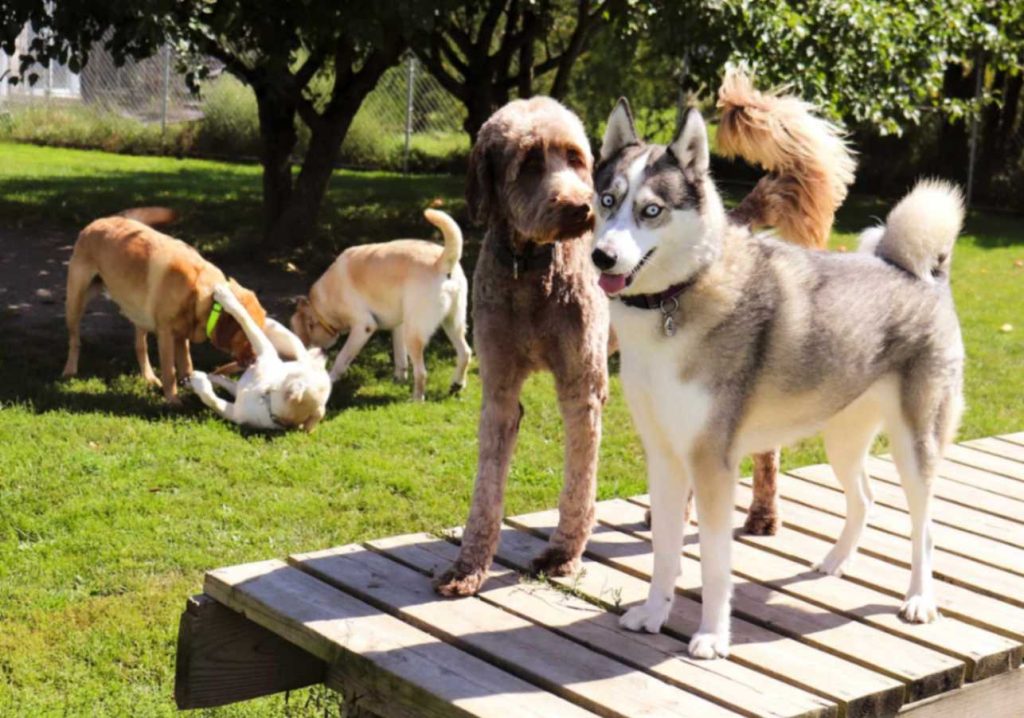
Though we do get quite a few dogs who need privacy, dogs are generally social creatures by nature, thriving on companionship and interaction with humans and other canines. While socialization is crucial for their well-being, a delicate balance exists in managing the size of their social groups. Limiting the number of dogs in a social group can positively impact their quality of life and behaviour, particularly because overcrowded play can push dogs past their ability to self-regulate, a pattern explored in redlining in dogs and behavioural overload.
Quality over quantity
When considering social groups for dogs, quality of interaction is paramount. Just like humans, dogs benefit from meaningful relationships where they can establish bonds and develop trust. In smaller groups, dogs are more likely to form close connections, leading to more harmonious interactions and reduced stress.
Reduced stress and anxiety
Large groups can overwhelm sensitive or less assertive dogs. Too many unfamiliar dogs can elevate anxiety, resulting in excessive barking, pacing, or aggression. Limiting group sizes helps mitigate these stressors and promotes calmer play, especially when dogs are also given adequate rest and decompression time as part of a balanced routine (see why dogs need their own space).
Better supervision and safety
Smaller groups allow staff to monitor interactions closely. Play stays appropriate, conflicts are spotted early, and intervention is faster—reducing injuries and escalation.
Enhanced training opportunities
In smaller groups, handlers can tailor guidance to individual dogs, reinforcing skills like proper greetings and respectful play. This personalized approach accelerates learning and strengthens social skills.
Health considerations
Proximity increases the risk of spreading contagious illness or parasites. Limiting group sizes reduces exposure and supports a cleaner, safer environment. The MSD Veterinary Manual explains that biosecurity is a set of management and physical measures designed to reduce the risk of introducing and spreading infectious agents among animals. In the kennel setting this includes steps like controlling entry of people and animals, segregating sick or newly arrived dogs, cleaning and disinfection protocols, and understanding how disease spreads so risks can be minimised.MSD Manual biosecurity guidance for animal care facilities.
Respect for personal space
Dogs have boundaries. Smaller groups give them room to engage at their own pace without feeling crowded, supporting positive, consensual interactions.
Long-term behavioural benefits
Thoughtful socialization—especially early—builds confidence and healthy habits that carry into adulthood. Smaller groups encourage positive patterns that generalize to other settings.
Conclusion
Socialization matters, but group size shapes the experience. Smaller groups prioritize quality interactions, reduce stress, improve safety and supervision, and support overall well-being. As caregivers, we should meet dogs’ social needs in ways that maximize happiness and health.
Before booking, ask how many dogs are socialized at once. Are staff equipped to maintain discipline and intervene promptly? Trust is built in the play yard as much as in the lobby.