
How to Deal With Codependent Dogs
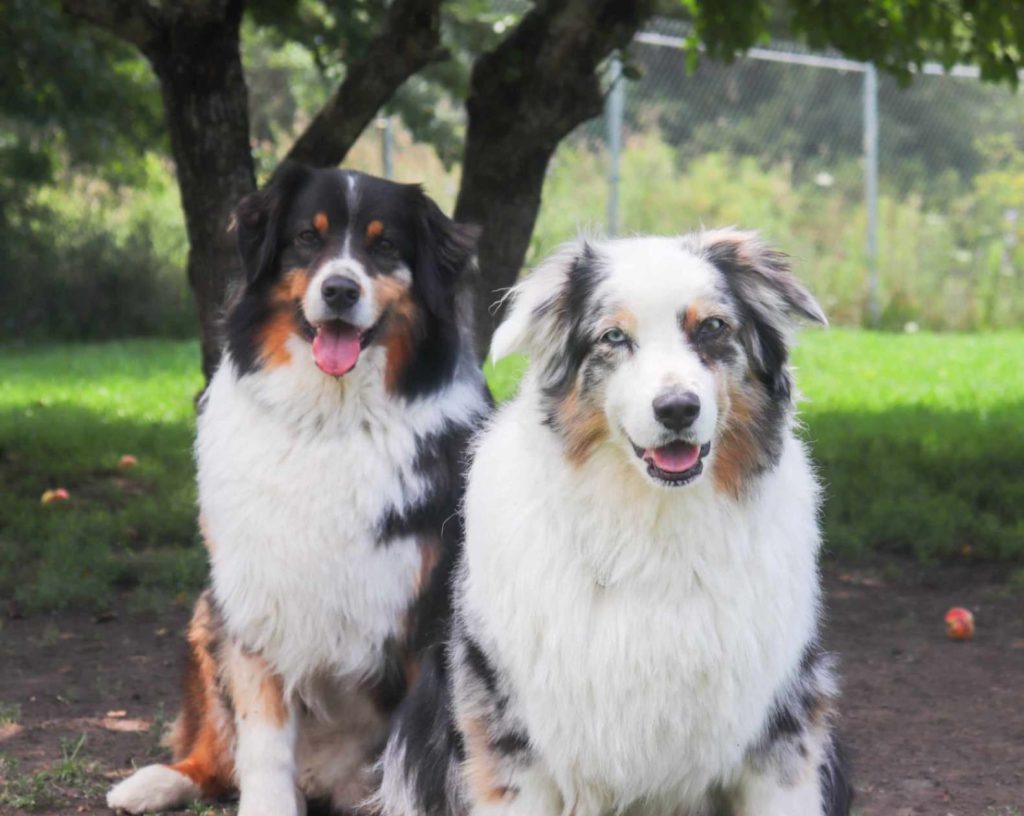
Have you ever heard of the concept of littermate syndrome? It’s an idea whereby two dogs of a similar age, typically littermates, grow up together and can become emotionally co-dependent.
Trying to separate them when they’re older can become extremely difficult. You’ve probably seen this in rehoming groups where ads say two dogs from the same home can’t be separated.
It’s tempting to dismiss this as sentimentality. But whether or not you agree with the label, there’s evidence that some dogs who become strongly attached to each other show significant stress-related behaviours when separated from their fur-family. These patterns often overlap with separation-related distress more broadly, which is discussed in how to help your dog adjust to being away from home.
Common symptoms of co-dependency
Fear of strangers (dogs or people)
Anxiety triggered by sounds or novel environments
Marked distress when separated from the other dog
Difficulty learning or responding to cues when apart
In short, puppies raised in overly tight pairs can struggle to interact normally with other dogs and people. They become closed off to external stimuli. Importantly, dogs don’t have to be littermates to develop this pattern.
At the kennel, we often notice it the first time bonded dogs are separated for grooming. A dog that’s too emotionally attached to another may show:
- Destructive behaviour (scratching or digging at doors)
- Excessive barking or vocalizing
- Stress urination
- Fear responses toward people or dogs
- Difficulty self-regulating
- Refusal to eat
Dogs crave predictability. When their primary source of consistency disappears, distress can spike. This is why creating safe opportunities for dogs to decompress and reset their nervous system matters, as outlined in Why Dogs Need Downtime.
Does co-dependency matter?
Short-term whining when one dog leaves for grooming might seem minor. The bigger risk shows up later. Dogs don’t live as long as we wish, and sudden loss of a bonded companion can trigger profound anxiety, appetite loss, and behavioural fallout. The University of Guelph’s Ontario Veterinary College provides owner-facing guidance on separation-related stress and anxiety in dogs, including behavioural changes that can follow loss or disruption of routine OVC guidance on distress in dogs.
How to deal with co-dependency
1) Personal training time
Build independence with one-on-one training and separate routines. Take dogs on separate walks or schedule grooming on different days so each learns to function without the other.
2) Socialize separately
Introduce each dog to new dogs and people on their own. Different dogs need different pacing. Separate social time reduces hovering, guarding, and learned helplessness. Alternating doggie daycare days can help.
3) Give them a job
Structured enrichment (sniff work, puzzle feeders, place work) gives each dog something constructive to do when separated and builds self-regulation.
4) Don’t create the dynamic unintentionally
Bonding can happen between any ages or breeds. Adding a second dog to “fix” an anxious dog can backfire. Teach self-regulation first, then add to the family thoughtfully. Spacing introductions by a few months helps establish healthy individual relationships.
Waiting also lets your first dog model good behaviour instead of passing along habits you don’t want repeated.
If you’re worried your dogs are too dependent on each other, a structured plan can help rebuild independence safely. Our facility setup allows us to tailor routines that reduce stress while building resilience.
Doing nothing tends to make separation harder later. Celebrate each dog’s individual nature and give them the skills to cope on their own.